
How Should Drivers Safely Pass a Group of Cyclists in California?
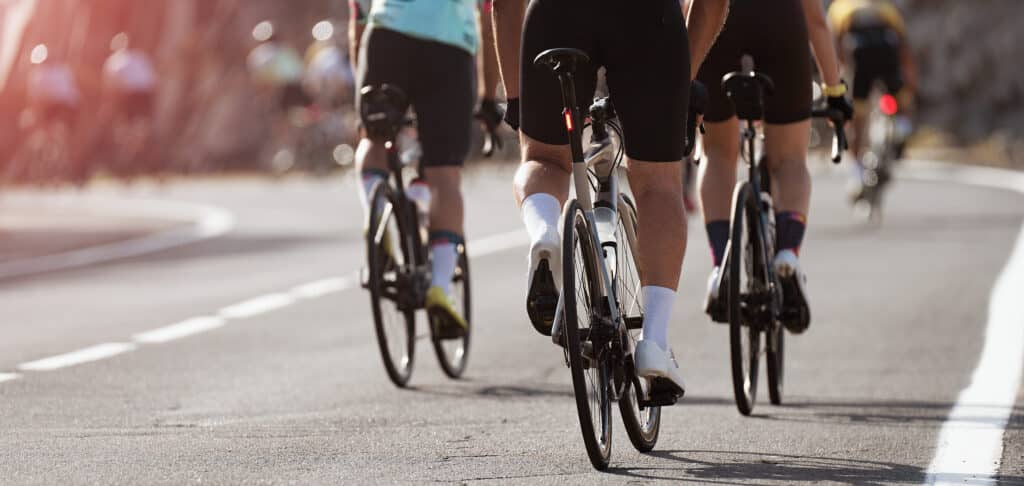
California roads are shared by drivers and cyclists, and large groups of riders can require drivers to take extra care when passing. A group of cyclists may occupy more of the roadway than a single rider, and individual cyclists may need to adjust their position to avoid hazards, communicate with other riders, or prepare for a turn.
California law gives bicyclists many of the same rights and responsibilities as motorists. Drivers therefore need to treat cyclists as legitimate roadway users and give them enough space to pass safely. The California Department of Motor Vehicles specifically advises drivers to leave at least three feet between their vehicle and a bicyclist when passing without changing lanes. When a driver approaches a large cycling group, understanding these rules can help prevent a dangerous collision.
Slow Down and Give the Group Space
Drivers should not assume they can quickly pass a group simply because the road appears open. A larger group may take longer to pass, and cyclists may move within their lane as they respond to traffic, road conditions, or other hazards.
The California DMV advises drivers to follow cyclists at a safe distance and pass only when it is safe to do so. Drivers should also avoid making sudden movements around bicycles.
If there is not enough room to pass safely, the driver should wait. Moving too close to a group in an attempt to get around it can put cyclists at risk of being struck or forced toward parked vehicles, debris, or the edge of the roadway.
Give Cyclists at Least Three Feet of Clearance
California’s three-foot passing requirement is an important protection for cyclists. When a driver cannot change lanes to pass a bicyclist, the DMV instructs the driver to allow at least three feet between the vehicle and the cyclist. If the driver cannot provide that clearance, the driver should wait until there is enough space to pass safely.
That distance matters even more when several cyclists are riding together. A driver who passes too closely may leave little room for a cyclist to react if another rider slows, a road hazard appears, or the group changes position. The three-foot rule also does not mean a driver should pass at any speed simply because the vehicle remains three feet away. Drivers still need to operate at a safe speed for the road and traffic conditions.
Change Lanes When Necessary
Sometimes the safest way to pass a group is to move into another lane. The California DMV explains that drivers may need to change lanes to safely pass a bicyclist traveling in the lane. After passing, the driver should return to the original lane when it is safe.
Before changing lanes, drivers should check their mirrors and blind spots and make sure they have enough room to complete the maneuver. This becomes especially important when a group of cyclists occupies a significant portion of the roadway.
Drivers should never move into another lane without first determining whether another vehicle, cyclist, or other road user is already there.
Be Especially Careful on Two-Lane Roads
Passing a group can become more difficult on a two-lane road because drivers may have oncoming traffic approaching from the opposite direction. A driver may see an opportunity to pass but have too little time or space to complete the maneuver safely.
The California DMV advises drivers to use particular caution when approaching or passing cyclists on two-lane roads. Drivers should not attempt a pass when they cannot safely determine whether there is enough room.
If an oncoming vehicle is approaching, the driver may need to remain behind the cyclists until the road provides enough space to pass. A few extra seconds of waiting can prevent a collision involving multiple road users.
Watch for Turns and Changes in Position
A group of cyclists does not always travel in a perfectly straight line. Riders may move around potholes, debris, parked vehicles, or other hazards. They may also change lanes or move into a different position before making a turn.
California law allows bicyclists to move left when necessary to avoid hazards or when a lane is too narrow for a bicycle and vehicle to travel safely side by side.
Drivers should therefore avoid passing a group immediately before an intersection or turn when doing so could put them in the path of a cyclist. The DMV also tells drivers to check for cyclists when changing lanes or entering traffic because bicycles can be difficult to see in blind spots.
Do Not Force Cyclists Toward the Edge of the Road
One of the risks of passing too closely is that a cyclist may have nowhere to go if the vehicle moves toward them. Parked cars, open doors, curbs, road debris, and uneven pavement can leave very little room for a cyclist to avoid a vehicle.
The DMV specifically instructs drivers to give bicyclists enough space so they are not forced toward parked vehicles or open vehicle doors.
This is particularly important when passing a group because several riders may be traveling close together. A driver who leaves insufficient space can create a chain reaction in which one cyclist moves to avoid the vehicle and causes another rider to fall.
What Happens if a Driver Hits a Group of Cyclists?
A collision involving a group of cyclists can cause serious injuries, even when the vehicle does not strike every rider directly. One cyclist may suffer a direct impact while others may fall while trying to avoid the vehicle.
When a crash occurs, investigators may look at the driver’s speed, roadway position, passing maneuver, traffic conditions, and available visibility. They may also consider witness statements, photographs, video footage, bicycle damage, vehicle damage, and other evidence that helps explain what happened.
If a driver failed to provide adequate clearance or made an unsafe passing maneuver, that conduct could become important when determining liability for an injured cyclist’s claim.
Because multiple cyclists may witness the same collision, group rides can also provide several potential sources of eyewitness evidence. Each person’s account may help establish how the driver approached the group and what happened immediately before the crash.
What Should Cyclists Do After a Crash?
Anyone injured in a collision should seek medical attention promptly. Cyclists who are able to do so should also document the scene, photograph their injuries and bicycle, and collect contact information from witnesses.
If several riders witnessed the accident, each person should preserve their own account of what they saw rather than relying on someone else to document the event. Video from bicycle cameras, vehicle cameras, or nearby businesses may also help establish what happened.
Medical records, photographs, witness statements, and other evidence can become important if an insurance company disputes responsibility for the crash.
Ashton & Price: Protecting Your Rights After a Bicycle Accident
When drivers fail to take those precautions, the consequences can be serious. A cyclist has little physical protection from a moving vehicle, and a collision can result in significant medical expenses, lost income, and long-term injuries.
If you or a loved one has been injured after a driver struck a cyclist or group of cyclists in California, Ashton & Price can help you understand your legal rights and pursue the compensation you may be entitled to recover. As Sacramento’s most trusted personal injury attorneys, they proudly represent injury victims throughout Sacramento and the Bay Area. Call (916) 786-7787 or (415) 843-2000 or contact us online today for a free consultation and take the first step toward recovery